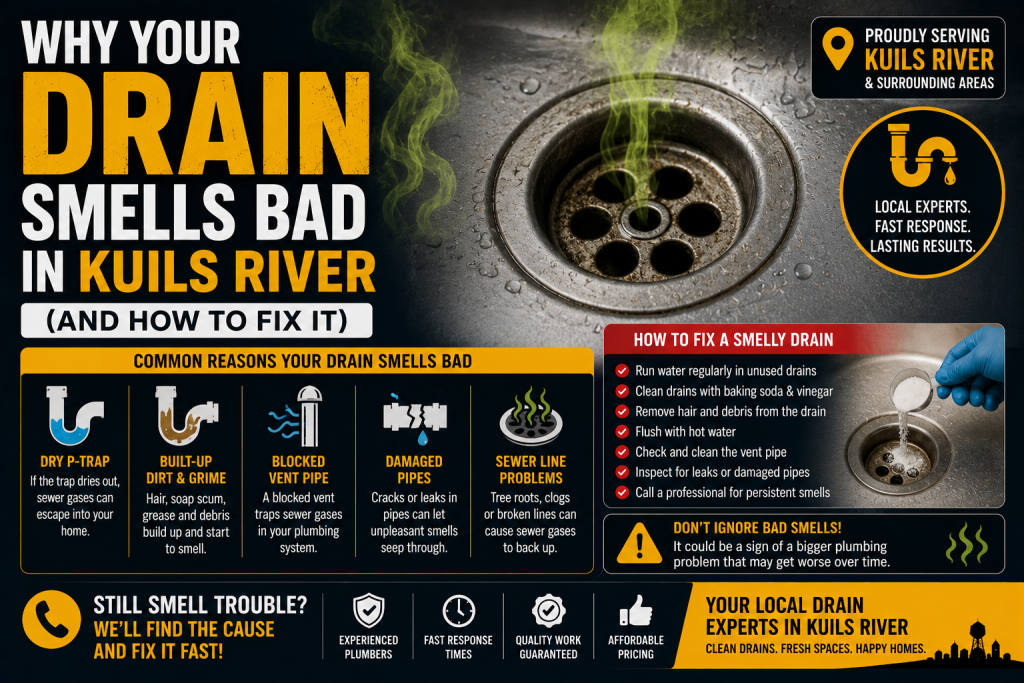
Why Your Drain Smells Bad in Kuils River (And How to Fix It)
A bad smelling drain is one of the most unpleasant plumbing problems to deal with in a home. Whether the smell comes from the kitchen sink, bathroom basin, shower drain, or outside drain, unpleasant odours are usually a sign that something inside the plumbing system is not working properly.
In many Kuils River homes, drain smells are caused by buildup inside pipes, blocked drains, trapped debris, stagnant water, or deeper plumbing issues developing further down the line. While some smells start off mild, they often become worse over time if the underlying cause is not dealt with properly.
What Causes Drain Smells?
Drain smells usually happen because waste material, bacteria, grease, soap residue, food particles, or stagnant water begin building up inside the pipe system. As this material breaks down, it creates unpleasant odours that travel back up through the drain.
In kitchen sinks, the smell is often linked to grease, food waste, and organic material trapped inside the pipes. In bathrooms, soap scum, hair, toothpaste residue, and stagnant water are more common causes.
The smell itself is often only one part of the problem. In many cases, a bad odour is an early warning sign that a blockage is forming somewhere in the plumbing system.
Kitchen Drain Smells
Kitchen drains are one of the most common places for smells to develop because of the amount of food and grease that passes through the sink daily. Even when plates are rinsed properly, small amounts of oil, grease, sauces, and food particles still enter the drain.
Over time, this material sticks to the inside of the pipe and begins trapping more debris. As bacteria grow inside the buildup, unpleasant smells develop and become noticeable near the sink.
Slow drainage, bubbling sounds, and smells appearing after running water are all signs that buildup may already be forming. If the issue continues, it may lead to a complete blockage. You can learn more on the Blocked Drains Kuils River page.
Bathroom Drain Smells
Bathroom drains usually smell because of soap residue, hair buildup, stagnant water, and trapped debris inside the pipe. In showers and basins, hair combines with soap and forms thick buildup that slowly reduces water flow while trapping bacteria.
Another common issue is stagnant water sitting inside sections of the plumbing system that are not draining correctly. This can create strong odours that become worse in warm conditions or after the bathroom has not been used for a while.
If multiple bathroom fixtures smell at the same time, the problem may be deeper in the drainage system rather than isolated to one drain.
Warning Signs That the Problem Is Getting Worse
Drain smells often appear before a major plumbing issue develops. There are several warning signs that indicate the problem may be becoming more serious.
- Water draining slowly
- Gurgling sounds after using the sink or shower
- Water backing up into fixtures
- Smells becoming stronger over time
- Multiple drains affected at once
If more than one of these signs is happening together, there may already be a developing blockage or deeper drainage issue.
Why Chemical Cleaners Are Not Always Enough
Many homeowners try chemical drain cleaners when smells start appearing. While these products may temporarily reduce odours, they often do not remove the real source of the problem.
If grease, hair, soap buildup, or trapped waste remains inside the pipe, the smell usually returns after a short time. Repeated use of strong chemicals may also damage certain pipes and fittings over time.
Recurring smells are usually a sign that the buildup itself needs to be properly cleared rather than masked temporarily.
How Drain Smells Connect to Other Plumbing Problems
Bad smelling drains are often linked to other plumbing issues happening in the home. Slow drains, low water pressure, recurring blockages, and hidden leaks can all contribute to ongoing drainage problems.
For example, a slow draining sink may allow stagnant water and buildup to sit inside the pipe for longer periods, increasing odours. You can read more on Slow Draining Sink in Kuils River.
If leaks are also present, moisture and bacteria growth can make smells worse. In those cases, it may help to review Leak Detection Kuils River.
How to Help Prevent Drain Smells
Preventing drain smells usually comes down to reducing buildup before it becomes serious. Small habits can make a big difference over time.
- Avoid pouring grease and oil down the sink
- Use drain strainers to catch food and hair
- Flush drains with hot water regularly
- Clean sink and shower drains consistently
- Deal with slow drainage early
For more prevention tips, read How to Prevent Blocked Drains in Kuils River Homes.
When Drain Smells Become an Emergency
While many drain smells develop slowly, some situations should not be ignored. If strong smells are combined with overflowing drains, water backups, or multiple blocked fixtures, the problem may already be serious.
In some cases, the blockage may be deeper in the drainage line and affect several parts of the plumbing system at once. Waiting too long can lead to flooding, burst pipes, or major drainage failures.
If the problem suddenly becomes severe or water starts backing up into the home, visit the Emergency Plumber Kuils River page for urgent assistance.
Nearby Areas With Similar Drain Problems
Bad smelling drains and blocked plumbing systems are common across nearby suburbs as well. Homes in surrounding areas often experience similar drainage problems caused by grease buildup, ageing pipes, and everyday plumbing use.
Helpful Pages
Need Help With a Bad Smelling Drain in Kuils River?
If your drains smell bad, drain slowly, or keep causing problems, getting the issue checked early can prevent bigger plumbing repairs later.