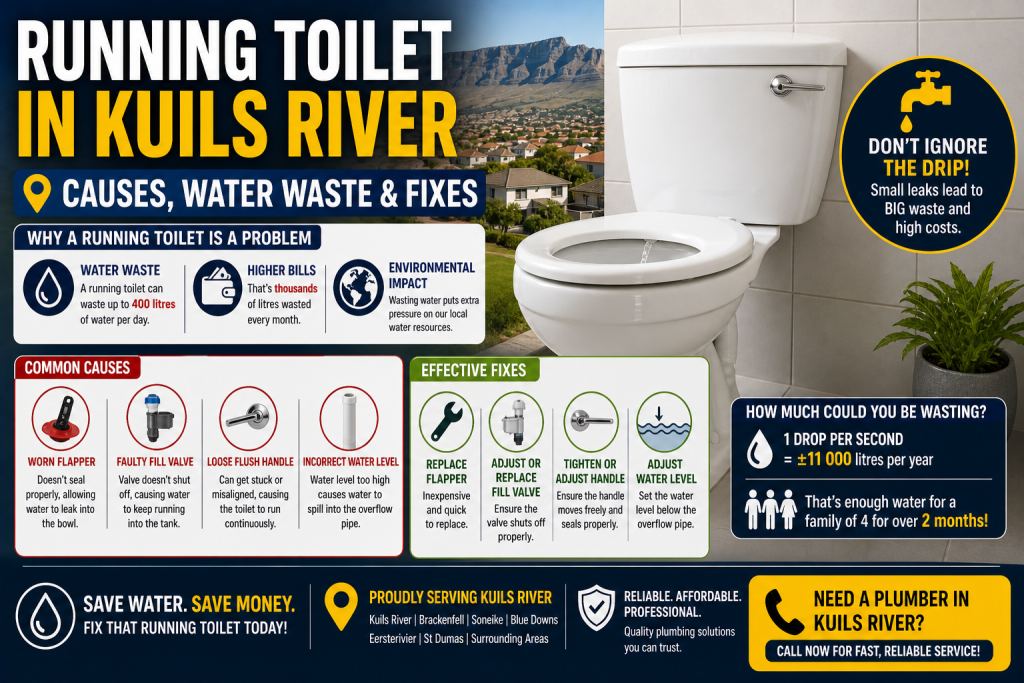
Running Toilet in Kuils River – Causes, Water Waste & Fixes
A running toilet may not seem like a major problem at first, but it can waste a surprising amount of water and increase your monthly bill without you even noticing. In many Kuils River homes, a constantly running toilet is one of the most common hidden plumbing issues.
Because the leak happens inside the cistern, it often goes unnoticed for long periods. Over time, this small issue can lead to higher water costs, unnecessary waste, and even additional strain on your plumbing system.
What Is a Running Toilet?
A running toilet is when water continues to flow from the cistern into the toilet bowl long after flushing. Instead of stopping automatically, the system keeps refilling and draining at the same time.
This creates a constant cycle of water movement that wastes water silently. Unlike visible leaks, this type of problem is often missed until a higher water bill or a closer inspection reveals it.
How Much Water Can a Running Toilet Waste?
Many homeowners underestimate how much water a running toilet can waste. Even a slow, steady leak can add up over time.
- Thousands of litres of water can be wasted each month
- Water bills may increase without a clear reason
- Continuous strain is placed on your plumbing system
If your bill has increased unexpectedly, it may be linked to a hidden toilet leak. You can also read Why Your Water Bill Is High in Kuils River.
Common Causes of a Running Toilet
Several components inside the cistern can cause a toilet to run continuously.
Worn Flapper Valve
The flapper controls water release into the bowl. If it becomes worn or does not seal properly, water continues to leak through.
Float Problems
The float controls the water level in the cistern. If it is set too high or not working correctly, water may overflow into the overflow tube.
Faulty Fill Valve
The fill valve regulates water entering the tank. When it fails, the system may keep refilling continuously.
Chain Issues
If the chain inside the cistern is too tight or tangled, it may prevent the flapper from sealing correctly.
Signs You Have a Running Toilet
Even if you do not hear obvious noise, there are signs that your toilet may be running:
- Continuous or intermittent water sound
- Water movement in the toilet bowl
- Unexpected increase in water bill
- Cistern refilling regularly without use
If you notice these signs, it is best to investigate early before more water is wasted.
Why You Should Not Ignore It
A running toilet may seem minor, but it can lead to bigger issues over time. Besides wasting water, it can also affect pressure and contribute to hidden plumbing problems.
In some cases, continuous water flow may even indicate deeper issues in your system, especially if combined with low pressure or leaks elsewhere.
If you are experiencing pressure issues, you can also read Low Water Pressure in Kuils River.
When to Call a Plumber
While some minor adjustments may fix the issue, you should call a plumber if:
- The problem keeps returning
- You are unsure what is causing it
- Multiple plumbing issues are happening at once
- Your water bill keeps increasing
Recurring problems often mean something deeper needs professional attention.
Nearby Areas With Similar Plumbing Issues
Running toilets and hidden leaks are common across many nearby suburbs. Homes in surrounding areas often experience similar plumbing issues due to wear, pressure changes, and everyday usage.
How a Running Toilet Affects Your Entire Plumbing System
A running toilet is often seen as a small, isolated problem, but in reality, it can affect your entire plumbing system over time. Because water is constantly flowing through the cistern and into the bowl, the system never fully settles. This continuous movement of water puts pressure on internal components and can contribute to wear in valves, seals, and connecting pipes.
In some homes, this constant demand for water can also slightly affect pressure levels, especially when combined with other plumbing issues. If there are already leaks, partially blocked pipes, or pressure irregularities, a running toilet can make these problems worse without being immediately obvious.
This is why a running toilet should not be ignored. It is not just about water waste — it is about long-term strain on your plumbing system and the increased risk of additional faults developing elsewhere.
Why Toilet Components Wear Out Over Time
Inside every toilet cistern are several moving parts that control how water fills, stops, and flushes. These parts are designed to handle regular use, but like any mechanical components, they wear down over time.
The flapper valve, for example, is made of rubber or a similar flexible material. Over time, it can harden, warp, or lose its ability to seal properly. When this happens, water slowly leaks into the bowl even when the toilet is not in use.
The fill valve is another key component. It controls how water enters the cistern after a flush. If it becomes faulty, it may not shut off completely, causing the tank to keep filling. This leads to water continuously flowing into the overflow tube.
Float mechanisms can also shift out of position. When the float is set too high, water levels rise above the intended point, triggering overflow and continuous flow. Even small misalignments can cause noticeable water waste over time.
How to Check if Your Toilet Is Silently Leaking
Not all running toilets are obvious. Some leaks are completely silent, making them harder to detect. In these cases, homeowners often only realise there is a problem when the water bill increases.
One simple way to check is to remove the cistern lid and observe the water level. If water is constantly moving or trickling into the overflow tube, the system is not shutting off correctly.
Another method is to add a few drops of food colouring into the cistern and wait without flushing. If colour appears in the toilet bowl after a short time, it indicates that water is leaking through the flapper valve.
These simple checks can help confirm whether a running toilet is the cause of unexplained water usage.
The Link Between Running Toilets and High Water Bills
A running toilet is one of the most common causes of unexpectedly high water bills in Kuils River homes. Because the leak is continuous, water usage increases steadily throughout the day and night.
Unlike visible leaks, which are usually fixed quickly, a running toilet can go unnoticed for weeks. This leads to significant water waste without any obvious sign of a problem.
If your monthly bill has increased without a clear reason, it is always worth checking your toilet as a possible source. You can also read Why Your Water Bill Is High in Kuils River for other possible causes.
When a Running Toilet Indicates a Bigger Problem
In some cases, a running toilet is not just a faulty component. It can be part of a larger plumbing issue. For example, if pressure levels are inconsistent, it may affect how the fill valve operates. Similarly, if there are leaks elsewhere in the system, water demand may fluctuate in ways that affect toilet performance.
If the problem keeps returning after adjustments or repairs, it is often a sign that the issue is not isolated. At this point, it may be worth checking for leaks or pressure problems elsewhere in the system.
You can explore related issues such as low water pressure in Kuils River or leak detection services if multiple symptoms are present.
Preventing Future Toilet Problems
Preventing running toilets is mostly about awareness and early action. Small adjustments and occasional checks can go a long way in avoiding long-term water waste.
- Check the cistern occasionally for unusual water movement
- Listen for continuous refilling sounds
- Fix minor issues as soon as they appear
- Replace worn components before they fail completely
- Pay attention to changes in your water bill
Taking these steps can help keep your plumbing system running efficiently and prevent unnecessary water loss over time.
Need Help With a Running Toilet in Kuils River?
If your toilet keeps running or your water bill is increasing, getting the issue fixed early can save water, reduce costs, and prevent further plumbing problems.